
Book summary
The Reckoning by David Halberstam is a sweeping comparative history of the American and Japanese auto industries told through the parallel stories of Ford Motor Company and Nissan. It traces the rise of Ford under Henry Ford and its postwar complacency and decline against Nissan's emergence from wartime devastation to become a lean, innovative global powerhouse. At every level from boardroom strategy to the factory floor the book contrasts American arrogance and rigid hierarchy with Japanese discipline, worker involvement, and long-term thinking. The core argument is that Detroit's failure to adapt to changing markets and competition in the 1970s and 1980s was not inevitable but the result of cultural and managerial shortcomings that allowed Japan to seize supremacy in automobile manufacturing.
Key founder lessons
-
1
Obsess over product quality
Halberstam shows Ford's post-WWII decline from ignoring quality while Nissan rose by relentlessly improving it; founders must embed quality in culture to avoid complacency.
-
2
Respect your frontline workers
Nissan's success stemmed from valuing assembly-line input and collaboration, unlike Ford's adversarial management; founders should treat operators as innovation partners.
-
3
Adapt to market reality
Ford clung to big-car assumptions while Nissan studied consumer shifts and pivoted; founders must challenge internal biases with external data.
-
4
Build long-term thinking
Japanese patience for incremental gains over quarterly wins let Nissan outlast Ford's short-term Detroit mindset; founders should prioritize sustainable progress.
-
5
Leadership humility matters
Nissan's leaders learned from failures and competitors while Ford's ego-driven executives resisted change; founders must stay teachable to navigate industry reckonings.
Grok's review
Rich history lesson, padded and dated for founders.
Halberstam delivers a sweeping, almost novelistic contrast between Ford's dysfunctional American arrogance and Nissan's disciplined rise, packed with memorable character studies of titans like Henry Ford II and various Japanese executives. The best parts illuminate how culture, hubris, and manufacturing philosophy determine corporate fate—still relevant for anyone scaling hardware or operations. But it's bloated with tangential anecdotes and period detail that could have been cut by a third, the evidence often feels anecdotal rather than rigorous, and many of its 1980s observations on Japanese superiority now read as quaint after decades of globalization and tech disruption. Worth reading for the storytelling if you have the time, but it's no tight business manual.
Best for: Founders obsessed with industrial history and corporate culture.
Similar books
-
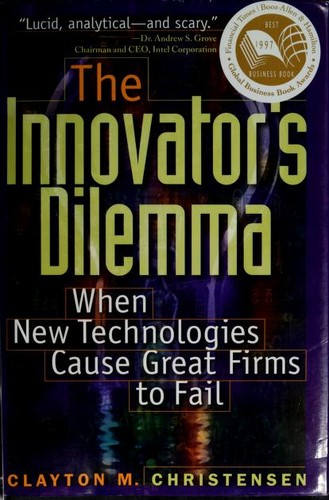
The Innovator's Dilemma
Clayton M. Christensen, L J Ganser
Reveals why great companies fail by clinging to old models, teaching disruptive innovation for founders.
-

Good to Great
Collins, James C., Jim Collins
Analyzes how companies achieve enduring greatness through disciplined leadership and strategy.
-
The Hard Thing About Hard Things
Ben Horowitz
Offers raw lessons on scaling startups, leadership crises, and making tough founder decisions.
-

Only the paranoid survive
Andrew S. Grove
Intel CEO's guide to navigating strategic inflection points and adapting in hyper-competitive markets.
-

Titan
Ron Chernow
Epic biography of John D. Rockefeller showing ruthless strategy, empire-building, and business evolution.
-

The Soul of a New Machine
Tracy Kidder
Chronicles a computer engineering team's intense race, highlighting innovation, leadership, and tech culture.
Founder activity
Nobody has shelved this yet
Be the first founder to add it.