
Book summary
The Psychology of Judgment and Decision Making by Scott Plous is a lively accessible introduction to the psychological research on how individuals and groups form judgments and make choices under uncertainty. Drawing on experimental findings rather than formal theory or mathematics it explores core building blocks such as perception memory context and question wording while contrasting classical rational models of decision making with contemporary accounts that emphasize systematic cognitive and social biases. The book examines real-world applications in medicine law business education and nuclear policy illustrates common traps like overconfidence framing effects and groupthink and offers practical strategies for reducing errors. A distinctive feature is the opening Reader Survey that lets readers compare their own answers with study participants to experience biases firsthand ultimately arguing that awareness of these patterns can meaningfully improve personal and collective decision making.
Key founder lessons
-
1
Avoid Overconfidence Bias
Founders should calibrate confidence levels by seeking disconfirming evidence before major pivots, as Plous shows overconfidence inflates success estimates.
-
2
Recognize Framing Effects
Test multiple framings of the same startup metrics or pitches, since Plous demonstrates how question wording alters choices dramatically.
-
3
Counter Availability Heuristic
Base hiring and market decisions on statistical data rather than vivid recent examples, countering the bias Plous highlights where memorable events skew probability judgments.
-
4
Mitigate Groupthink Traps
Actively solicit dissenting views in team meetings to avoid the conformity pressures Plous details that suppress critical evaluation in groups.
-
5
Account for Anchoring
Deliberately adjust from initial numbers in valuations or forecasts, applying Plous's findings that arbitrary anchors unduly influence final estimates.
Grok's review
Solid intro to biases, but feels padded and dated for founders.
Plous delivers a breezy tour of classic judgment-and-decision-making research—Kahneman/Tversky-era heuristics, framing effects, groupthink, overconfidence—wrapped in everyday examples from business, law, and medicine. The opening reader survey is a clever hook that still works. What doesn't: the book pads thin material with repetitive anecdotes, leans heavily on 70s/80s experiments that feel quaint in the age of behavioral econ 2.0 and massive replication crises, and offers surprisingly little rigorous evidence beyond the original studies. It's non-technical by design, which is both its charm and its weakness—founders craving depth or up-to-date meta-analyses will feel shortchanged. Still, the core message that your brain is a biased prediction machine remains useful; just don't expect transformative startup wisdom.
Best for: Founders new to cognitive biases who want an accessible first pass.
Similar books
-

Thinking, fast and slow
Daniel Kahneman
Reveals cognitive biases and System 1/System 2 thinking crucial for better founder decisions.
-
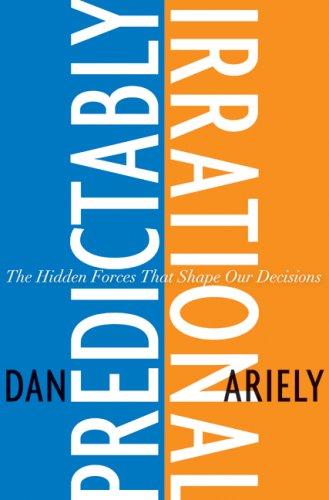
Predictably Irrational
Dan Ariely
Explores hidden forces shaping irrational choices, aiding product and pricing strategies.
-

Nudge
Richard H. Thaler, Cass R. Sunstein
Shows how choice architecture influences behavior, vital for marketing and user experience.
-
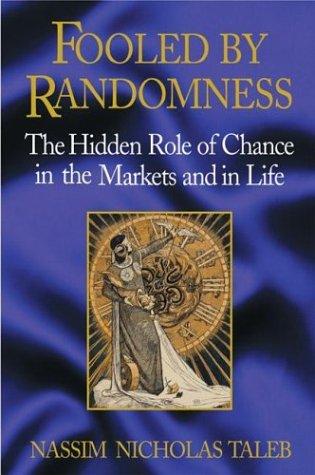
Fooled by randomness
Nassim Nicholas Taleb
Teaches humility toward luck and uncertainty essential for startup risk management.
-

The undoing project
Michael Lewis, Dennis Boutsikaris
Chronicles Kahneman and Tversky's work on heuristics, offering deep insights into decision flaws.
-

Decisive
Chip Heath, Dan Heath
Provides a practical framework to overcome biases and make smarter business choices.
Founder activity
Nobody has shelved this yet
Be the first founder to add it.