
Book summary
The Undoing Project by Michael Lewis chronicles the groundbreaking collaboration between Israeli psychologists Daniel Kahneman and Amos Tversky whose research upended traditional economic assumptions about rational decision making. The book explores how their studies on cognitive biases heuristics and prospect theory revealed systematic flaws in human judgment under uncertainty ultimately birthing the field of behavioral economics. Lewis weaves their personal friendship and intellectual partnership with the profound implications of their work which influenced everything from medical diagnostics to public policy and evidence-based regulation. At its core the narrative argues that understanding these mental shortcuts is essential to improving real-world choices and designing systems that better account for human irrationality.
Key founder lessons
-
1
Question your intuition first
Founders must recognize cognitive biases like overconfidence that distort startup decisions, as Kahneman and Tversky showed intuitions often fail under uncertainty.
-
2
Embrace probabilistic thinking
Evaluate startup risks and opportunities using base rates and statistics rather than vivid narratives, mirroring the psychologists' challenge to representativeness heuristic.
-
3
Design against bias in teams
Implement decision processes like pre-mortems to counteract anchoring and availability biases that plague founder and investor judgments.
-
4
Test assumptions relentlessly
Use rapid experimentation to undo flawed mental models, inspired by the authors' work on how people mispredict and revise beliefs.
-
5
Value loss aversion strategically
Frame pitches and product decisions around avoiding losses, as Tversky and Kahneman proved losses loom larger than gains in human psychology.
Grok's review
Brilliant origin story, but padded narrative for founders.
Michael Lewis turns the partnership of Kahneman and Tversky into a gripping buddy-movie narrative that explains how their work demolished the rational-actor model and birthed behavioral economics. The storytelling is classic Lewis—vivid, fast-paced, and full of human drama—but the book is padded with long biographical detours and repetitive anecdotes that could have been cut by a third without losing the thesis. Some of the experimental evidence now feels thin or superseded by replication crises that Lewis barely nods at, and the 'undoing' framing occasionally feels stretched. Still, every founder who makes product, pricing, hiring, or fundraising decisions will come away smarter about their own predictable irrationality.
Best for: Founders who want to understand cognitive biases without reading academic papers.
Similar books
-

Thinking, fast and slow
Daniel Kahneman
Deep dive into cognitive biases and decision-making that every founder needs for better judgment.
-
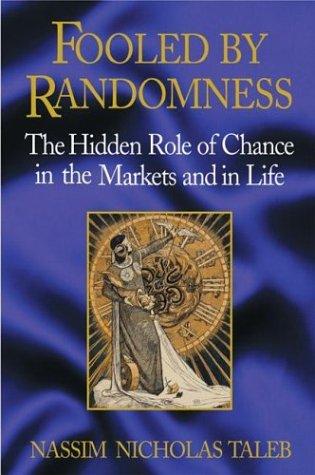
Fooled by randomness
Nassim Nicholas Taleb
Reveals how luck and randomness shape success, sharpening founder resilience and strategy.
-

The Psychology of Money
Morgan Housel
Timeless lessons on behavior with money and risk that inform startup investing and leadership.
-
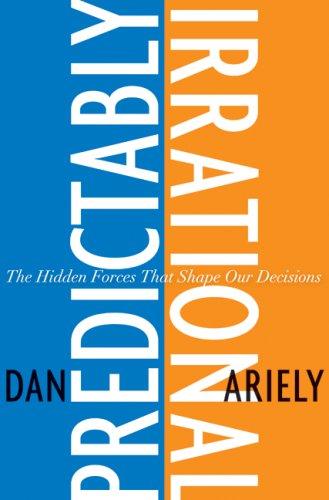
Predictably Irrational
Dan Ariely
Unpacks hidden forces driving decisions, helping founders build better products and teams.
-

The Black Swan
Nassim Nicholas Taleb, David Chandler
Teaches how to navigate improbable events, vital for startup survival and opportunity spotting.
-

Range
David J. Epstein
Shows why generalists outperform specialists, guiding founders toward broader thinking and innovation.
Founder activity
Nobody has shelved this yet
Be the first founder to add it.