
Book summary
The Quants by Scott Patterson chronicles the rise of mathematically driven hedge fund traders who transformed Wall Street from the 1980s onward using complex models rooted in physics, calculus, and computer algorithms. It follows four key figures—Peter Muller of PDT, Ken Griffin of Citadel, Cliff Asness of AQR, and Boaz Weinstein—portraying their eccentric personalities, immense successes, and high-stakes poker games as symbols of their risk-taking culture. The core argument is that while these quants' quantitative strategies generated enormous wealth and supplanted traditional traders, their overreliance on flawed mathematical models and herd behavior helped inflate a massive bubble that triggered the 2008 financial crisis, proving that even the most sophisticated formulas cannot fully predict or control chaotic markets. The book serves as both a character study and a cautionary tale about the dangers of replacing human judgment with unchecked algorithmic faith.
Key founder lessons
-
1
Models fail in black swans
Founders must stress-test startup models against rare crises, as quants' Gaussian assumptions collapsed in 2008.
-
2
Over-reliance on data blinds
Avoid letting algorithms override human judgment; quants ignored market signals that contradicted their formulas.
-
3
Leverage amplifies ruin
Scale cautiously with debt or burn; quants' massive leverage turned small model errors into billions in losses.
-
4
Herding creates bubbles
Differentiate from crowded founder strategies; similar quant models led to synchronized selling and market meltdown.
-
5
Eccentric talent needs culture
Hire brilliant misfits like PDT's Muller but build safeguards against their rages and blind spots, as at AQR and Citadel.
Grok's review
Entertaining Wall Street yarn, thin on startup lessons.
The Quants is a lively, character-driven page-turner that reads like a finance thriller, profiling the math geniuses who reshaped hedge funds with models, algorithms, and overconfidence. Patterson does a solid job humanizing figures like Peter Muller, Cliff Asness, and Ken Griffin, showing how their quant revolution displaced old-school traders—until it all blew up in the 2008 crisis, exposing the fragility of black-box strategies. For startup founders, the core warning (beware of over-reliance on elegant but brittle models) is valuable, especially in data-driven product or growth decisions. Weaknesses include noticeable padding with poker and Vegas anecdotes that feel like filler, some dated post-crisis ideas that haven't aged perfectly, and evidence that's more journalistic storytelling than rigorous analysis—thin on deep technical or repeatable insights founders can actually apply.
Best for: Founders scaling data teams or building AI products
Similar books
-
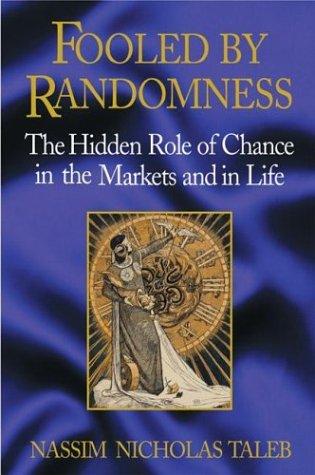
Fooled by randomness
Nassim Nicholas Taleb
Explores luck and randomness in success, offering vital lessons for decision-making under uncertainty in business.
-

The Black Swan
Nassim Nicholas Taleb, David Chandler
Reveals how rare, high-impact events shape markets and companies, teaching antifragile strategies for founders.
-

Thinking, fast and slow
Daniel Kahneman
Unpacks cognitive biases affecting judgment, essential for better leadership and investment decisions.
-

A Man for All Markets
Edward O. Thorp
A quant pioneer's memoir blending probability, gambling, and hedge fund success with practical business insights.
-
More money than God
Sebastian Mallaby
Chronicles hedge fund history and strategies, highlighting risk, innovation, and founder mindsets in finance.
-

The Psychology of Money
Morgan Housel
Examines behavioral truths about wealth and risk, delivering timeless lessons for building sustainable businesses.
Founder activity
Nobody has shelved this yet
Be the first founder to add it.