
Book summary
Genius by James Gleick is a biography of the brilliant and eccentric physicist Richard Feynman whose life spanned the development of quantum mechanics the Manhattan Project and the Challenger disaster inquiry. The book explores Feynman's unique intuitive approach to science his disdain for pretension and his playful yet profound way of thinking that led to groundbreaking contributions in quantum electrodynamics and particle physics. At its core it argues that true genius lies not in abstract mathematical formalism but in a relentless curious and visual engagement with the physical world that can demystify even the most complex phenomena.
Key founder lessons
-
1
Obsess over fundamentals
Gleick shows Feynman rebuilding physics from first principles; founders should relentlessly question assumptions in their core product and market.
-
2
Simplify ruthlessly
Feynman's path-integral approach cut through complexity; apply this by distilling startup strategy and UX to their elegant minimum.
-
3
Teach to master
Feynman's lectures forced clarity; founders who explain their vision internally and to customers gain deeper insight and alignment.
-
4
Embrace play and curiosity
Feynman's safecracking and bongo-playing fueled breakthroughs; schedule unstructured time to spark creative solutions in product and business.
-
5
Iterate through failure
Feynman's atomic-bomb and Challenger work reveal rapid experimentation and honest post-mortems accelerate learning.
Grok's review
Brilliant mind, meandering biography.
Gleick's portrait of Richard Feynman is a masterclass in capturing raw intellectual charisma and the joy of problem-solving, which any founder chasing breakthroughs will find magnetic. The narrative shines when it dives into Feynman's unconventional thinking, his delight in pattern-breaking, and his disdain for academic pomposity—lessons that echo in startup culture. But it's padded with tangential anecdotes and physics minutiae that drag for non-scientists, the evidence for some of his 'genius habits' feels thin and anecdotal, and the 1992 lens makes parts feel dated in our AI-augmented world. Worth a founder's time if you're willing to skim; otherwise, it's a pleasurable but non-essential detour.
Best for: Founders obsessed with creative thinking and iconoclasts
Similar books
-
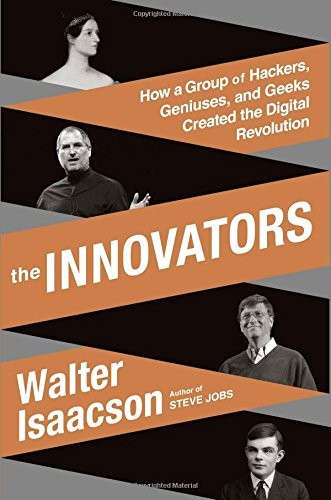
The Innovators
Walter Isaacson, Francisco José Ramos Mena
Chronicles digital revolution pioneers, revealing collaboration and vision lessons for building tech companies.
-

Steve Jobs
Walter Isaacson
Deep biography of a genius founder, packed with leadership, innovation, and product strategy insights.
-
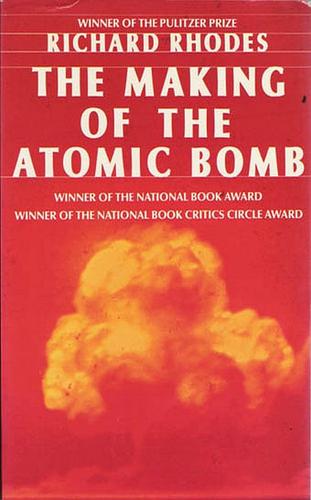
The making of the atomic bomb
Richard Rhodes
Epic story of scientific brilliance and project management under pressure, with lessons on high-stakes execution.
-

Einstein
Walter Isaacson
Reveals creative thinking and resilience of a genius, applicable to visionary leadership and problem-solving.
-
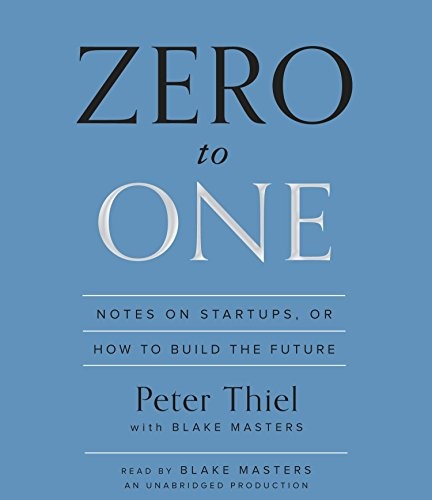
Zero to One
Peter A. Thiel, Blake Masters
Masterclass on building breakthrough companies through unique innovation and monopoly thinking.
-
The Hard Thing About Hard Things
Ben Horowitz
Raw lessons on scaling startups, leadership under duress, and navigating chaos like a true builder.
Founder activity
Nobody has shelved this yet
Be the first founder to add it.