
Book summary
Maverick by Ricardo Semler recounts how the author transformed his family's traditional Brazilian manufacturing company Semco into a radical experiment in workplace democracy and employee empowerment. Semler eliminated most rules, hierarchies, and top-down controls, allowing workers to set their own hours, salaries, choose their managers, and even vote on major business decisions. The core argument is that treating employees like responsible adults rather than children unleashes creativity, motivation, and productivity while making the company far more adaptable and successful in a turbulent market.
Key founder lessons
-
1
Democratize decision-making
Replace top-down hierarchy with employee votes on strategy, pay, and hires to unlock motivation and innovation.
-
2
Eliminate unnecessary rules
Remove rigid policies like fixed hours and dress codes, letting workers set their own as long as results are delivered.
-
3
Share financial transparency
Open all company books to every employee so they can understand and influence profit, costs, and salaries directly.
-
4
Adopt participatory leadership
Let teams self-manage and rotate leadership roles, reducing CEO bottlenecks and building collective ownership.
-
5
Question everything constantly
Run regular 'Why?' sessions to challenge every process and assumption, preventing bureaucracy creep.
Grok's review
Radical democracy that mostly works—until it doesn't.
Semler turns a stodgy Brazilian manufacturing firm into a laboratory of extreme autonomy: employees set their own salaries, hours, and even choose their bosses. The storytelling is vivid and the contrarian spirit is catnip for any founder tired of command-and-control theater. Yet the book pads its 300+ pages with repetition, the evidence is largely anecdotal success stories from one idiosyncratic culture, and many of the 'radical' practices now feel dated in a post-2000s startup world that has absorbed some of the same lessons more efficiently. Still, it's worth reading because it forces you to question how much hierarchy you actually need and how far you can push trust before chaos wins.
Best for: Founders wrestling with scaling culture and delegation.
Similar books
-
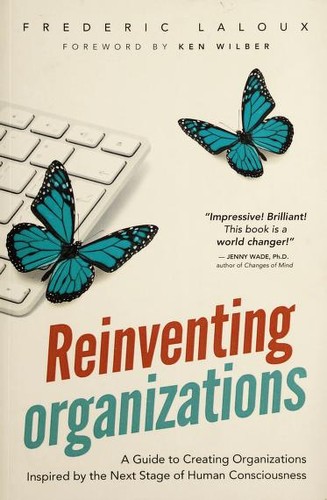
Reinventing Organizations
Frederic Laloux
Explores radical management practices and self-organizing companies, building on Semler's democratic ideals.
-

Turn the Ship Around!: A True Story of Turning Followers into Leaders
L. David Marquet, Stephen R. Covey
Shows how to empower teams and decentralize decision-making for higher engagement and performance.
-

The Fifth Discipline
Peter Senge, Peter M. Senge
Teaches systems thinking and learning organizations essential for innovative, adaptive companies.
-

Drive
Daniel H. Pink
Reveals the science of motivation beyond rewards, aligning with Semler's trust-based culture.
-

Holacracy
Brian J. Robertson
Details a concrete system for distributed authority and dynamic roles in flat organizations.
-

Work Rules!
Laszlo Bock
Shares Google's people practices that foster freedom, creativity, and high performance.
Founder activity
Nobody has shelved this yet
Be the first founder to add it.