
Book summary
The Principles of Product Development Flow by Donald G. Reinertsen applies queueing theory, network theory, and economic principles to product development, treating it as a flow of information rather than a manufacturing process. The core argument is that by managing economic trade-offs, reducing batch sizes, limiting work-in-process, and accelerating feedback loops, organizations can dramatically shorten cycle times, lower costs, and increase innovation. Reinertsen replaces traditional project management dogma with a set of 175 specific principles that emphasize decentralized control, variability management, and continuous flow to achieve superior economic outcomes in uncertain environments. The book provides a rigorous, quantitative framework that challenges conventional wisdom and shows how small changes in how work is sequenced and controlled can yield outsized improvements in development performance.
Key founder lessons
-
1
Prioritize economic value over efficiency
Founders must use cost of delay to quantify and rank projects by economic impact rather than utilization metrics.
-
2
Minimize batch sizes for faster flow
Reduce work-in-process and batch sizes aggressively to shorten cycle times and accelerate feedback loops.
-
3
Exploit variability with buffers
Manage high-variability product development by adding strategic buffers instead of trying to eliminate all variation.
-
4
Decentralize control for speed
Push decision-making authority to the lowest competent level to enable rapid responses without centralized bottlenecks.
-
5
Measure and optimize queues
Track queue lengths and wait times religiously, as they directly drive cycle time and economic performance.
Grok's review
Dense gold on flow, but padded and dated.
Reinertsen's book is one of the sharpest treatments of product development as an economic system, hammering home that queues, batch sizes, and variability are the real killers of speed and profitability. The core ideas—economic thinking, decentralized control, and managing flow like a factory—have aged extremely well and directly influenced Lean Startup, Shape Up, and modern agile practices. That said, it's padded with repetition, overly academic tone, and some sections feel like they're stretching thin evidence from manufacturing analogies into software without enough real-world startup cases. The 2009 examples already feel dated in today's AI-augmented world. Still, the signal-to-noise ratio beats most business books; founders who push through the dryness will rethink their entire roadmap process.
Best for: Product leaders optimizing velocity
Similar books
-

The goal
Eliyahu M. Goldratt, Jeff Cox
Applies Theory of Constraints to manufacturing and business operations for breakthrough productivity insights.
-

Toyota Production System
Taiichi Ohno
Reveals lean principles and waste elimination techniques that transformed manufacturing and apply to product development.
-

High Output Management
Andrew S. Grove
Practical framework for managing teams, meetings, and decisions to achieve high productivity in fast-paced environments.
-
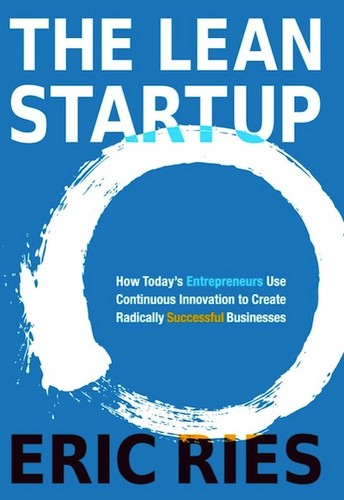
The Lean Startup
Eric Ries
Introduces build-measure-learn loops and validated learning to optimize product development under uncertainty.
-

Shape Up
Ryan Singer
Outlines Basecamp's efficient product development process focused on fixed time, variable scope, and betting on ideas.
-

Inspired
Marty Cagan
Masterclass on modern product management, discovery, and delivery practices for building successful technology products.
Founder activity
Nobody has shelved this yet
Be the first founder to add it.