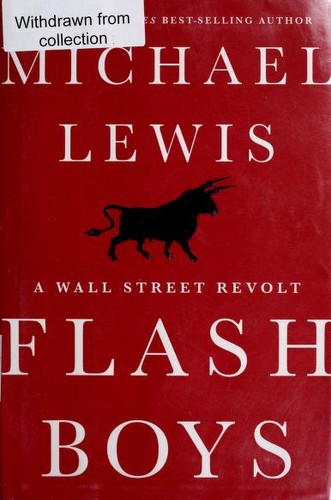
Book summary
Flash Boys by Michael Lewis exposes how high-frequency trading firms and the big banks enabling them rigged the U.S. stock market after the 2008 financial crisis turning it into a predatory system that extracts billions from ordinary investors through speed advantages and hidden fees. The book follows a small band of unlikely reformers including ex-trader Brad Katsuyama who discover the manipulation and build an alternative exchange called IEX designed to level the playing field with deliberate delays and transparent rules. Lewis argues that despite regulatory reforms Wall Street remains dominated by entrenched interests but these outsiders prove that targeted innovation can still restore fairness and integrity to the markets.
Key founder lessons
-
1
High-frequency trading rigs markets
Founders must deeply understand hidden incentives and technology edges that create unfair advantages in their industry, as HFT firms exploited speed and dark pools.
-
2
Build transparent systems
Like the IEX exchange, design products that remove information asymmetries and structural cheats to genuinely level the playing field for users.
-
3
Assemble unlikely coalitions
Diverse outsiders with varied expertise, as in the Flash Boys group, can disrupt entrenched powers when aligned against systemic flaws.
-
4
Incentives drive behavior
Scrutinize and redesign misaligned incentives in your ecosystem, since banks and HFTs profited from complexity at customers' expense.
-
5
Persistence beats incumbents
Founders should endure regulatory and industry pushback, as the IEX team did, to force fairer markets despite opposition from giants.
Grok's review
Gripping Wall Street yarn; thin on startup lessons.
Flash Boys is classic Michael Lewis: fast-paced narrative that reads like a thriller, exposing how high-frequency trading firms exploited market structure for unfair speed advantages after the financial crisis. The storytelling shines as Lewis follows the underdog band of reformers (including the eccentric Brad Katsuyama) building IEX to level the playing field. However, it suffers from padding with excessive character backstories that dilute focus, some dated ideas now that HFT has evolved and been partially regulated, and evidence that often feels anecdotal rather than rigorously data-driven. For startup founders, the real value lies in the lessons on incentive misalignments, regulatory capture, and building defensible tech against incumbents, but it's not a handbook—more entertainment with side insights than essential strategy reading.
Best for: Founders curious about fintech and market structure
Similar books
-

The big short
Michael Lewis, Francisco José Ramos Mena
Reveals market inefficiencies and bold contrarian thinking essential for spotting startup opportunities.
-

Liar's Poker
Michael Lewis, Blanca Ribera de Madariaga
Exposes Wall Street culture and high-stakes deal-making lessons directly applicable to fundraising and sales.
-

The Spider Network
David Enrich
Uncovers LIBOR rigging with insights on ethics, competition, and regulatory navigation in business.
-

Dark Pools
Scott Patterson
Explores high-frequency trading's tech arms race, teaching innovation speed and competitive strategy.
-
Barbarians at the Gate
Bryan Burrough and John Helyar
Chronicles a massive LBO battle, offering timeless lessons on corporate power, negotiation, and ambition.
-

The Smartest Guys in the Room
Bethany McLean, Peter Elkind
Details Enron's rise and fall, highlighting risks of hype, culture, and ethical shortcuts in scaling.
Founder activity
Nobody has shelved this yet
Be the first founder to add it.