Book summary
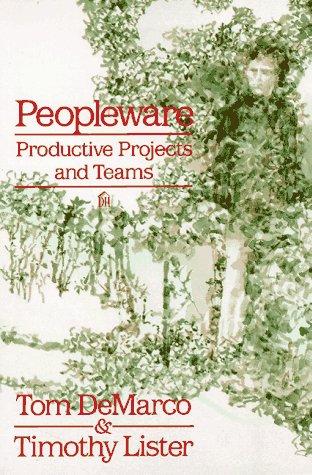
Peopleware by Tom DeMarco and Timothy Lister is a management book that argues the primary obstacles to successful software development are not technical but sociological and environmental. It emphasizes that the biggest factors in programmer productivity are things like workspace privacy, freedom from interruption, team chemistry, and protecting "flow" state rather than tools, languages, or methodologies. The core argument is that managers must focus on creating humane work environments and fostering motivated teams, treating people as the most important "ware" in the development equation instead of obsessing over process and technology. The book is filled with data from the authors' Coding War Games that consistently show huge productivity differences between teams based on these human factors.
Key founder lessons
-
1
People, not technology, are the bottleneck
Founders must prioritize hiring and retaining talent over chasing the latest tools, as the book proves environmental and human factors drive productivity far more than tech.
-
2
Protect developer flow state ruthlessly
Eliminate interruptions like open offices and status meetings; DeMarco shows quiet, focused time multiplies output in software teams.
-
3
Create a sociotechnical workplace
Design offices and policies around human needs for space, privacy, and community, not corporate efficiency, to boost morale and results.
-
4
Measure and manage for quality, not quantity
Track defect rates and rework instead of lines of code or hours; the authors demonstrate this leads to faster, more reliable delivery.
-
5
Build a culture of egotless work
Encourage peer code reviews and collaborative problem-solving without blame; the book highlights how this reduces errors and improves team learning.
Grok's review
Still relevant sociology, padded with filler.
Peopleware remains one of the best books on why most software projects fail for human reasons rather than technical ones—office interruptions, open-plan disasters, and treating developers like interchangeable widgets destroy productivity. The core insights on environment, trust, and protecting flow time are gold for any founder scaling an engineering team. However, it's padded with repetitive anecdotes, some ideas feel very 80s/90s (the workplace examples haven't aged well), and the evidence is largely observational rather than rigorous. Worth reading once, but skim the later chapters.
Best for: Engineering leaders fighting bureaucracy
Similar books
-
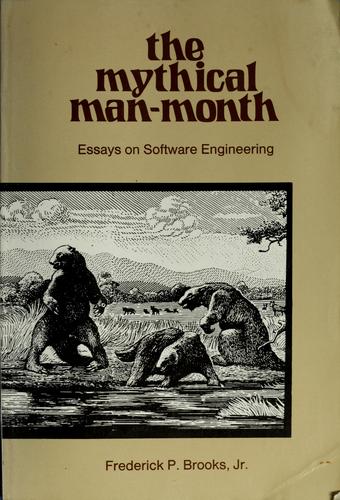
The Mythical Man-Month
Frederick P. Brooks
Reveals why adding people to projects delays them, with timeless lessons on team dynamics and software management.
-

Drive
Daniel H. Pink
Explores intrinsic motivation and autonomy, showing how to create environments where knowledge workers thrive.
-

High Output Management
Andrew S. Grove
Delivers practical productivity frameworks from Intel's CEO for managing teams and scaling operations effectively.
-

The Manager's Path
Camille Fournier
Offers a career ladder for tech leaders, with insights on engineering management and building high-performing teams.
-

An Elegant Puzzle
Will Larson
Provides systems thinking for engineering leadership, tackling scaling, productivity, and org design challenges.
-

Thinking in systems
Donella H. Meadows, Diana Wright
Teaches systemic thinking to understand complex organizations, feedback loops, and unintended consequences in building companies.
Founder activity
Nobody has shelved this yet
Be the first founder to add it.