
Book summary
The Mythical Man-Month by Frederick P. Brooks is a collection of essays drawn from the author's experience managing the development of IBM's OS/360 operating system in the 1960s. It explores the inherent challenges of large-scale software engineering, arguing that software projects are fundamentally different from other engineering efforts because of their complexity, invisibility, and the difficulty of estimating time and effort. The core argument is that adding more people to a late project only delays it further (Brooks' Law), that conceptual integrity requires a small, coherent design authority, and that building software is an inherently creative and iterative process that cannot be perfectly scheduled like factory production. The book remains influential for its insights on team organization, the "second-system effect," and the human factors that make software development resistant to purely technical solutions.
Key founder lessons
-
1
Adding manpower delays late projects
Brooks' Law teaches founders that late software projects worsen with extra people due to ramp-up and communication overheads.
-
2
Build one to throw away
Founders should expect the first system version to be disposable, planning a prototype to inform the final product's architecture.
-
3
Conceptual integrity demands few minds
A single chief architect or small team ensures coherent design, avoiding the bloat from too many contributors.
-
4
Communication overhead grows quadratically
Founders must minimize interfaces between teams, as effort scales with n(n-1)/2 channels in larger groups.
-
5
No silver bullet for productivity
Founders should avoid hoping for magical tools or languages, focusing instead on essential difficulties like complexity and change.
Grok's review
Essential ideas, padded with dated filler.
The core insights—especially Brooks' Law and the concept of conceptual integrity—are still painfully relevant to any founder scaling an engineering team; the book correctly nails why software projects balloon in complexity and why communication overhead is the silent killer. Unfortunately it's padded with repetitive essays, speculative forecasts about future programming languages that mostly missed, and thin anecdotal evidence that feels more like war stories than rigorous analysis. The 20th-anniversary edition adds some reflection but doesn't fix the meandering structure or the fact that large sections now read like 1970s mainframe nostalgia. Worth reading once for the timeless 30% that still applies to startups, but don't treat it as a modern management bible.
Best for: Engineering leaders scaling past 10 people
Similar books
-

The psychology of computer programming
Gerald M. Weinberg
Reveals how people and teams actually work in software, with timeless lessons on productivity and collaboration.
-

Peopleware
Tom DeMarco, Timothy Lister
Focuses on the human side of software projects, emphasizing environment, culture, and management for high-performing teams.
-

High Output Management
Andrew S. Grove
A practical guide to management and productivity from Intel's CEO, packed with actionable insights for tech leaders.
-
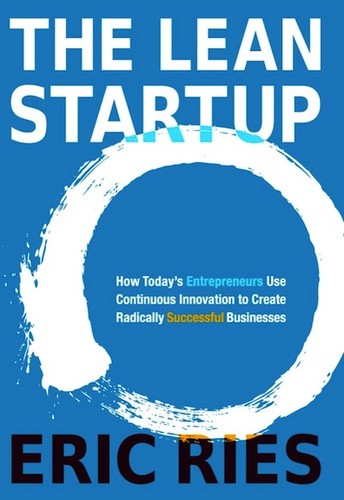
The Lean Startup
Eric Ries
Teaches iterative product development, measurement, and pivoting to build successful companies efficiently.
-

The Manager's Path
Camille Fournier
Offers a career ladder for engineering managers, with practical advice on leadership, teams, and scaling impact.
-

Thinking, fast and slow
Daniel Kahneman
Explores cognitive biases and decision-making, helping founders make better choices under uncertainty.
Founder activity
Nobody has shelved this yet
Be the first founder to add it.