
Book summary
Critical Chain by Eliyahu M. Goldratt applies the Theory of Constraints to project management showing how traditional methods of scheduling with padded task times individual resource efficiency and multitasking create chronic delays and cost overruns. The core solution replaces these with aggressive task estimates a single project buffer at the end and a critical chain schedule that protects the true longest sequence of dependent tasks while subordinating noncritical resources. By focusing attention on the few constraints rather than spreading effort across all tasks the approach dramatically shortens overall project duration keeps work within budget and improves ontime completion rates especially for innovative product development. The book argues that managing uncertainty through buffers and changing behaviors around multitasking and student syndrome is far more powerful than adding more resources or tightening controls.
Key founder lessons
-
1
Identify the Critical Chain
Pinpoint the longest sequence of dependent tasks including resource constraints to focus all efforts on what truly determines project duration.
-
2
Protect with Buffers
Add project, feeding, and resource buffers strategically to absorb uncertainties without padding every individual task.
-
3
Avoid Parkinson's Law
Set aggressive task estimates and use buffer management instead of inflating times, preventing work from expanding to fill allotted time.
-
4
Focus on Throughput
Prioritize completing the critical chain over local efficiencies or multitasking, measuring success by overall project velocity.
-
5
Manage Resource Dependencies
Explicitly schedule and protect bottleneck resources rather than assuming unlimited availability, eliminating hidden delays in new product development.
Grok's review
Theory of Constraints classic with too much novel padding.
Critical Chain repackages Goldratt's Theory of Constraints for project management, replacing the flawed critical path with a focus on bottlenecks, buffers, and protecting throughput—ideas that can genuinely help startups ship faster without burning out teams. The core insights on multitasking, student syndrome, and why Parkinson's Law kills timelines are sharp and still relevant for founders juggling product launches or engineering roadmaps. However, it's padded with an unnecessary business-novel format that's dated, preachy, and often feels like filler; the evidence is mostly anecdotal, and some assumptions about human behavior feel simplistic or unproven by modern psych research. Worth reading if you can skim the story and extract the principles, but it's no timeless bible—pair it with something like The Goal for better ROI on your time.
Best for: Founders managing unpredictable product development
Similar books
-

The goal
Eliyahu M. Goldratt, Jeff Cox
Applies Theory of Constraints to manufacturing and operations, teaching bottleneck management for scalable startups.
-

It's not luck
Eliyahu M. Goldratt
Extends TOC to marketing, sales, and strategy with practical problem-solving for business growth.
-

The Phoenix Project
Gene Kim, Kevin Behr
Novel on DevOps and IT that mirrors Critical Chain's style, highlighting constraints in tech delivery.
-

Toyota kata
Mike Rother
Teaches scientific thinking and continuous improvement habits essential for operational excellence.
-

High Output Management
Andrew S. Grove
Practical guide to management, meetings, and decision-making that boosts founder productivity.
-
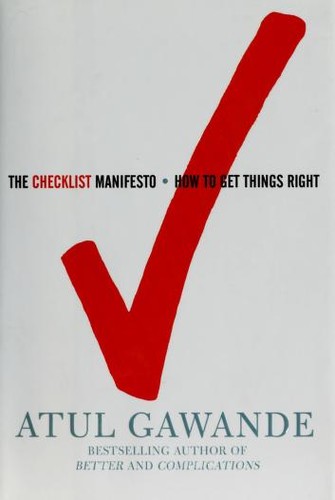
The Checklist Manifesto
Atul Gawande
Shows how checklists tame complexity and prevent errors, vital for reliable scaling.
Founder activity
Nobody has shelved this yet
Be the first founder to add it.