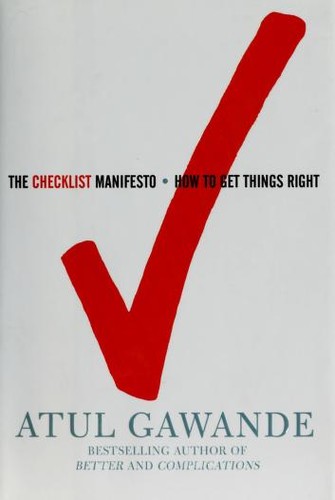
Book summary
The Checklist Manifesto by Atul Gawande explores how simple checklists can dramatically improve performance and reduce errors in complex, high-stakes fields like surgery, aviation, construction, and finance. Gawande argues that while expertise and technology have advanced, the overwhelming volume and intricacy of modern tasks cause even highly skilled professionals to miss critical steps, and that well-designed checklists serve as a vital safeguard by distributing decision-making power, enforcing discipline, and fostering teamwork. Drawing on real-world examples from medicine to disaster response, the book makes the case that checklists are not rigid scripts that stifle judgment but practical tools that harness collective intelligence and humility to achieve greater reliability and success.
Key founder lessons
-
1
Use checklists for complex tasks
Founders should create and follow checklists for critical startup processes like product launches to avoid errors in high-stakes situations, as shown in surgery and aviation.
-
2
Distinguish DO-CONFIRM from READ-DO
Startup teams should use DO-CONFIRM checklists during fast-paced activities like investor pitches, pausing to verify key steps rather than reading sequentially.
-
3
Empower team communication
Implement a team huddle checklist before key meetings to ensure everyone speaks up, mirroring how surgical teams confirm roles and concerns to improve outcomes.
-
4
Test and refine checklists
Founders must iteratively test checklists in real operations, like Gawande did with surgery, to make them practical and effective for scaling the business.
-
5
Combine discipline with expertise
Pair founder intuition with simple checklists for routine decisions like hiring, preventing overconfidence failures seen in complex fields like medicine.
Grok's review
Checklists work, but the book is padded sermon.
Gawande makes a compelling case that simple checklists save lives and reduce errors in high-stakes environments, drawing from his surgery experience, aviation, and construction. For founders, the core idea is gold: even experts need external aids to combat complexity and hubris, especially as your startup scales into operations, hiring, or product launches. What doesn't work is the repetitive storytelling that pads a magazine-length insight into a full book, the occasionally dated examples, and evidence that leans heavily on anecdotes rather than rigorous studies. It's still worth a founder's time if you skip the fluff, but don't expect revolutionary depth.
Best for: Scaling operators and first-time CEOs
Similar books
-

The Power of Habit
Charles Duhigg
Unpacks how habits form and can be transformed to boost personal and organizational productivity.
-

Atomic Habits
James Clear
Delivers practical systems for building good habits and eliminating bad ones at work and in life.
-
Deep Work
Cal Newport
Shows how to cultivate focused, distraction-free work essential for high-impact execution.
-

High Output Management
Andrew S. Grove
Classic on scaling teams, meetings, and decisions with operational rigor like checklists.
-
The Hard Thing About Hard Things
Ben Horowitz
Raw lessons on leadership and tough calls when building and running a company.
Founder activity
Nobody has shelved this yet
Be the first founder to add it.