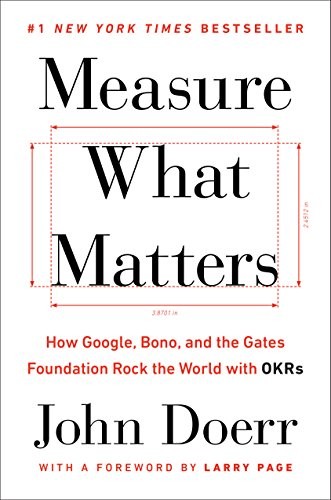
Book summary
Measure What Matters by John Doerr is a guide to the Objectives and Key Results (OKR) system for setting and tracking goals in organizations. The book explains how OKRs work by defining ambitious qualitative objectives paired with specific measurable key results that must be completed within a set time frame, creating transparency across all levels from entry employees to CEOs. Drawing from Doerr's experiences at Intel under Andy Grove and his investment in Google, it demonstrates through case studies how OKRs drive focus, alignment, agility, and explosive growth while improving employee satisfaction. The core argument is that faithfully implementing OKRs surfaces the most important work, fosters coordination, enables fast failure, and helps companies of any size achieve operating excellence and outsized results.
Key founder lessons
-
1
Commit to ambitious, inspiring Objectives
Set big, qualitative goals like Google's 'organize the world's information' to rally the team, as Doerr taught Page and Brin.
-
2
Pair Objectives with measurable Key Results
Define 3-5 specific, quantifiable outcomes with deadlines to track progress, directly from Intel's OKR system Doerr brought to Google.
-
3
Make all OKRs transparent company-wide
Share every level's goals openly to align efforts across silos and foster accountability, as practiced at Google and Intel.
-
4
Regularly review and grade OKR progress
Score results objectively at quarter's end to learn, adjust, and decide when to pivot or kill failing initiatives, per Grove's method.
-
5
Cascade OKRs to link top-down and bottom-up
Connect executive objectives to team and individual ones for unified focus while allowing grassroots input, driving Google's explosive growth.
Grok's review
OKR bible that's half hype, half padding.
Measure What Matters is a solid introduction to Objectives and Key Results, credibly tracing the system from Andy Grove at Intel through Google and a parade of Doerr's portfolio companies. The core idea—ruthless focus on measurable outcomes, transparency, and regular scoring—remains one of the better lightweight frameworks for fast-moving startups, and the Google and Intel stories are genuinely instructive. That said, the book is padded with repetitive case studies, celebrity name-dropping (Bono's OKRs?), and thin evidence that often feels like VC marketing collateral rather than rigorous analysis. Many of the examples are dated, the advice on implementation is surprisingly shallow once you get past the cheerleading, and there's little discussion of how OKRs fail in practice or when they become bureaucratic theater. Worth reading once if you've never used OKRs, but don't treat it as gospel.
Best for: Founders and operators new to goal-setting frameworks.
Similar books
-

High Output Management
Andrew S. Grove
Teaches effective management and productivity systems for scaling teams and operations.
-
The Effective Executive
Peter F Drucker
Masterclass in prioritizing, decision-making, and getting the right things done as a leader.
-

Radical Candor
Kim Malone Scott
Practical framework for feedback and building high-trust teams that drive results.
-

Good to Great
Collins, James C., Jim Collins
Data-driven insights on what differentiates top-performing companies from the rest.
-
The Hard Thing About Hard Things
Ben Horowitz
Raw lessons on navigating tough leadership decisions and company crises.
-

Atomic Habits
James Clear
Actionable system for building habits that boost personal and team productivity.
Founder activity
Nobody has shelved this yet
Be the first founder to add it.