
Book summary
Ultralearning by Scott Young explores how to master complex skills and knowledge rapidly through intense, self-directed projects that defy conventional passive learning. Drawing from his own feats like learning the MIT computer science curriculum in one year and acquiring multiple languages quickly, Young presents seven core principles including metalearning, focus, direct practice, drill, retrieval, feedback, and retention to structure highly effective learning campaigns. The book argues that what matters most is not innate talent or time invested but the strategic intensity and smart techniques applied, enabling anyone to achieve extraordinary results in a fraction of the usual time whether for career, languages, or personal projects. It combines inspiring personal stories with practical guidance for driven learners seeking to stand out.
Key founder lessons
-
1
Prioritize Directness
Practice the exact skill you need in real contexts, like building products to learn programming, instead of passive theory.
-
2
Drill the Hard Parts
Identify and isolate weaknesses through focused repetition to rapidly improve your weakest startup skills.
-
3
Use Feedback Loops
Seek immediate, specific feedback on your work to iterate faster than competitors in product and sales.
-
4
Overlearn for Retention
Master concepts beyond basic proficiency to retain knowledge under pressure when scaling your business.
-
5
Experiment with Techniques
Test different learning methods aggressively to discover what accelerates your acquisition of new founder skills.
Grok's review
Solid tactics, padded with hype and thin evidence.
Ultralearning delivers a crisp set of principles—metalearning, directness, drill, retrieval, feedback, retention, and intuition—that actually work when applied with discipline, which is why many startup folks swear by it for rapid skill acquisition. The MIT challenge and language feats are legitimately impressive and make the book motivational without being empty cheerleading. But it drags with repetitive anecdotes, overpromises on 'life-changing' results, and leans heavily on personal stories and cherry-picked studies rather than robust evidence; some ideas feel dated in the post-ChatGPT world where AI handles much of the grunt work. It's worth a founder's time if you're in a steep learning curve for a new domain, but don't treat it as gospel—skim the middle chapters.
Best for: Founders tackling intense skill ramps
Similar books
-
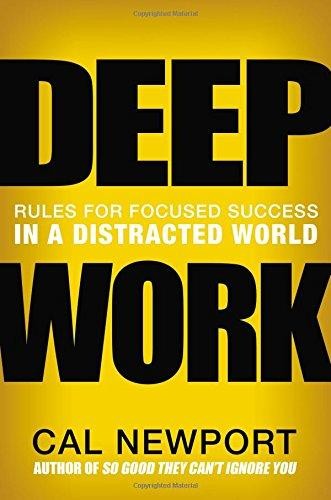
Deep Work
Cal Newport
Master focused intensity to learn and create faster, like ultralearning but for sustained high-impact work.
-

Atomic Habits
James Clear
Build systems for rapid skill acquisition and consistent progress essential for founders.
-

The 4-Hour Chef
Timothy Ferriss
Deconstructs meta-learning techniques across domains to accelerate mastery and efficiency.
-

Make It Stick
Peter C. Brown, Henry L. Roediger
Evidence-based strategies for effective learning and retention to fuel continuous founder growth.
-

Range
David J. Epstein
Why broad, integrated knowledge often outperforms narrow specialization in complex careers and startups.
-

Peak
Anders Ericsson, Robert Pool
Reveals deliberate practice methods to achieve expert-level performance in any skill.
Founder activity
Nobody has shelved this yet
Be the first founder to add it.