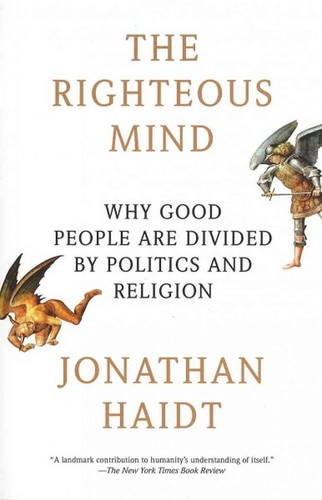
Book summary
The Righteous Mind by Jonathan Haidt is a groundbreaking investigation into the psychological and evolutionary origins of human morality, arguing that moral intuitions arise from six innate foundations rather than rational deliberation. Haidt shows how these foundations shape religion, politics, and culture, explaining the deep divisions in American society as clashes between liberals who prioritize care and fairness and conservatives who value loyalty, authority, and sanctity as well. The book refutes the New Atheists by demonstrating that religion evolved to bind groups and promote cooperation, and it urges greater understanding across moral divides to reduce polarization.
Key founder lessons
-
1
Intuitions drive moral judgments
Founders must recognize that team and investor decisions stem from gut feelings first, then rationalized, so appeal to emotions before logic.
-
2
Morality binds and blinds
Understand that shared company values create loyalty but also groupthink; actively seek dissenting views to avoid blind spots in strategy.
-
3
Six moral foundations matter
Craft culture and messaging that resonates across care, fairness, loyalty, authority, sanctity, and liberty to unite diverse stakeholders.
-
4
We are 90% chimp, 10% bee
Balance self-interest with hive-like cooperation in teams; design incentives that trigger groupish psychology for peak performance.
-
5
Reason is a press secretary
Use debate and devil's advocates in decision-making to counter post-hoc rationalizations and uncover better startup truths.
Grok's review
Insightful but padded moral psychology for founders.
Haidt's core framework—moral foundations theory and the elephant-rider metaphor—is genuinely useful for startup leaders who must navigate team values, customer psychology, and polarized markets. It explains why rational arguments fail in culture-war-like company debates and why 'intuitions come first.' The book shines when linking evolution, psychology, and politics, but it suffers from repetition, some dated post-2012 ideas on polarization, and evidence that feels selectively thin in places. It's not a business book, so expect long detours into religion and philosophy that could have been cut by a third. Still, the sections on why liberals and conservatives talk past each other are worth the price for any founder scaling a team or product that touches real human disagreements.
Best for: Founders struggling with team or customer value conflicts
Similar books
-

Thinking, fast and slow
Daniel Kahneman
Reveals cognitive biases that shape decisions, vital for better leadership and strategy.
-

Predictably Irrational
Dan Ariely
Uncovers hidden forces driving human behavior, improving sales, marketing, and team management.
-
Sapiens
Yuval Noah Harari
Explains cultural evolution and cooperation, offering deep lessons on scaling organizations.
-

Atomic Habits
James Clear
Builds systems for personal and team productivity, fueling consistent execution.
-

High Output Management
Andrew S. Grove
Delivers practical leadership frameworks for growing teams and driving results.
Founder activity
Nobody has shelved this yet
Be the first founder to add it.