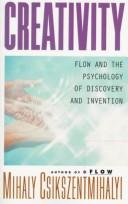
Book summary
Creativity by Mihaly Csikszentmihalyi examines what leads to those peak moments that make life worth living drawing on interviews with nearly 100 exceptional creators across fields and three decades of research. Using his flow theory the book explores the creative process itself why creative people are often perceived as selfish or arrogant and why the stereotype of the tortured genius is largely a myth. Csikszentmihalyi argues that creativity is not a mysterious gift but a learnable way of interacting with the world that can be cultivated through supportive environments and personal habits. Ultimately he makes the case that nurturing creativity is essential for personal fulfillment and for the continued progress of society.
Key founder lessons
-
1
Prioritize flow for peak creativity
Founders cultivate daily flow states through challenging yet manageable tasks to generate breakthrough ideas, as detailed in the interviews.
-
2
Master domain knowledge first
Deep expertise in a field is essential before creativity emerges; founders invest years building skills before innovating their startup's core.
-
3
Embrace intrinsic motivation
Pursue work for personal fulfillment rather than external rewards, driving sustained creative output as seen in the profiled scientists and artists.
-
4
Navigate the systems model
Innovate by aligning personal creativity with domain rules and field gatekeepers; founders must understand market and investor dynamics to succeed.
-
5
Balance solitude and collaboration
Alternate between solitary reflection and social interaction to refine ideas, countering the myth of the isolated tortured genius.
Grok's review
Insightful but padded and dated for founders.
Csikszentmihalyi's 'Creativity' dives deep into the lives of exceptional creators through interviews, revealing that true creativity emerges from a flow state, domain mastery, and supportive environments rather than lone-genius myths. For startup founders, the core ideas around systems thinking for innovation and balancing divergent/convergent thinking remain valuable, especially in building creative teams. However, it's weakened by repetitive anecdotes that pad the length, some now-outdated psychological frameworks from the 90s, and evidence that's largely qualitative and selective rather than rigorous. It's worth skimming for the framework but feels less actionable than more modern takes like 'The Creative Curve' or 'Originals'.
Best for: Founders seeking deeper psychology of innovation
Similar books
-

Flow
Mihaly Csikszentmihalyi
Deepens understanding of optimal experience and creativity essential for sustained innovation in startups.
-

The Creative Habit
Twyla Tharp
Practical system for turning creativity into daily discipline that drives consistent business output.
-

Steal like an artist
Austin Kleon
Shows how to remix ideas creatively, a core skill for product development and marketing.
-
Deep Work
Cal Newport
Teaches focused attention that maximizes creative problem-solving and execution in high-growth companies.
-

Originals
Adam Grant
Reveals how to champion novel ideas and manage risk, directly applicable to startup leadership.
Founder activity
Nobody has shelved this yet
Be the first founder to add it.