
Book summary
Flow by Mihaly Csikszentmihalyi explores the psychology of optimal experience, introducing the concept of "flow" as a state of complete absorption in an activity where deep enjoyment, creativity, and total involvement occur. The book argues that flow arises when challenges are balanced with skills, leading to heightened focus and a sense of control that transcends everyday concerns. Csikszentmihalyi demonstrates how individuals can deliberately cultivate this state by structuring consciousness and ordering incoming information, rather than leaving it to chance. Ultimately, it teaches that mastering flow is the key to genuine happiness and transforming the quality of daily life.
Key founder lessons
-
1
Engineer challenges to match skills
Founders must set clear, incremental goals with immediate feedback to enter flow during product development or problem-solving.
-
2
Eliminate distractions ruthlessly
Startup leaders control consciousness by minimizing interruptions, enabling sustained deep work on critical tasks like strategy.
-
3
Pursue autotelic work
Treat building the company as intrinsically rewarding, not just for outcomes, to maintain motivation through inevitable setbacks.
-
4
Transform threats into opportunities
Reframe business failures or pivots as challenges that demand full engagement, converting anxiety into flow states.
-
5
Cultivate high-concentration habits
Founders practice focusing attention deliberately in daily routines to achieve creative breakthroughs and optimal team performance.
Grok's review
Timeless insight buried in academic padding.
The core idea—that flow (total absorption where challenge meets skill) drives peak performance, creativity, and happiness—is gold for founders grinding through uncertainty and high-stakes execution. Csikszentmihalyi's research shows why some work sessions feel effortless and joyful while others drain you, and the control principles remain useful for designing better days, teams, and products. But it's weakened by repetitive examples, dated 90s psychology that feels thin on rigorous evidence by today's standards, and a tendency to philosophize without enough concrete tactics for modern startup chaos. Worth reading once if you haven't, but skim the middle chapters; the signal-to-noise isn't founder-efficient.
Best for: Founders seeking deeper work and personal energy management.
Similar books
-
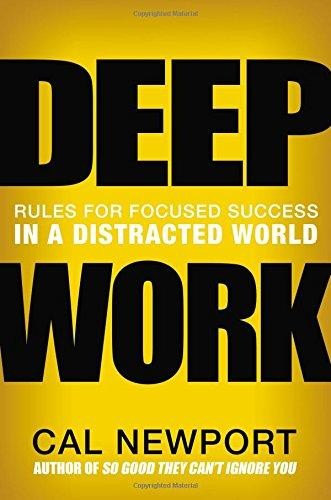
Deep Work
Cal Newport
Master focused, distraction-free work to achieve flow states and build a thriving startup.
-

Atomic Habits
James Clear
Build systems for peak productivity and sustained creative flow in building your company.
-

The Psychology of Money
Morgan Housel
Understand behavioral patterns that drive better financial decisions and long-term startup success.
-

Thinking, fast and slow
Daniel Kahneman
Decode cognitive biases to improve founder decision-making and team performance.
-

Peak
Roland Smith
Learn deliberate practice to reach expert-level performance and innovation in your venture.
-

Mindset
Carol S. Dweck
Cultivate a growth mindset essential for resilience, learning, and scaling a company.
Founder activity
Nobody has shelved this yet
Be the first founder to add it.