
Book summary
The Making of Prince of Persia by Jordan Mechner is a firsthand journal chronicling the two years he spent designing developing and refining the groundbreaking 1989 platformer game while working at Brøderbund. Through daily entries the book reveals the creative technical and personal struggles of a young programmer balancing artistic ambition with deadlines including innovative animation techniques rotoscoping and level design that defined the series. Its core argument is that great games emerge not from smooth inspiration but from persistent iteration relentless problem-solving and the messy human process of turning a solitary vision into a polished product that resonates with players.
Key founder lessons
-
1
Persist through repeated rejection
Mechner faced years of publisher rejections and near-cancellations yet kept refining the game until it succeeded; founders must endure multiple pivots and investor nos.
-
2
Ship imperfect versions iteratively
Prince of Persia evolved from rough prototypes to polished product over four years of daily tweaks; founders should release MVPs and improve based on real feedback rather than waiting for perfection.
-
3
Leverage personal constraints creatively
Working alone in a tiny apartment with limited tools forced Mechner to innovate on animation and design; founders can turn scarce resources into unique product advantages.
-
4
Balance vision with practical execution
Mechner's detailed journals show constant trade-offs between ambitious ideas and what could actually be coded in time; founders must ruthlessly prioritize features against deadlines.
-
5
Document your process obsessively
Mechner's journals captured every doubt, breakthrough, and decision, providing clarity during chaos; founders should keep similar records to reflect, learn, and maintain sanity.
Grok's review
Fascinating founder diary, but padded and dated.
Mechner's journals capture the raw, obsessive reality of building a breakthrough game in the late '80s—endless iteration, creative doubt, team friction, and the grind of shipping something that changes an industry. Startup founders will recognize the mix of euphoria, burnout, and serendipity that feels like building in a garage with no roadmap. What doesn't work is the padding: the book is bloated with mundane daily entries, repetitive angst, and period-specific details that haven't aged especially well. The evidence is thin beyond one person's subjective log; there's little broader analysis or lessons extracted for modern readers. Still worth a founder's time if you treat it like a primary source rather than a polished business book.
Best for: Indie founders who love raw creator diaries
Similar books
-
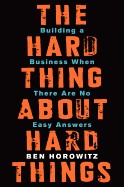
The Hard Thing About Hard Things
Ben Horowitz
Reveals the raw realities of scaling a startup with candid lessons from a founder’s toughest battles.
-

High Output Management
Andrew S. Grove
Masterful guide on operational excellence and leadership drawn from Intel’s high-stakes growth years.
-

The Ride of a Lifetime
Robert Iger
Inside story of transforming Disney, packed with decision-making and creative leadership insights.
-

Shoe Dog
Phil Knight
Gripping memoir of Nike’s chaotic early days, teaching resilience and bold risk-taking.
-
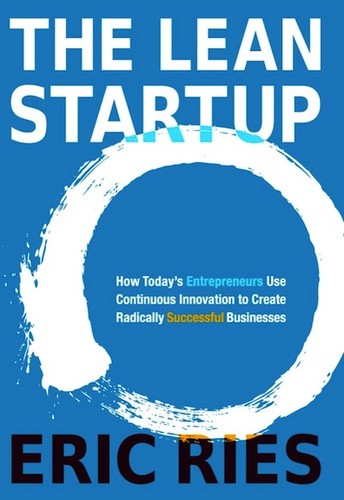
The Lean Startup
Eric Ries
Systematic framework for iterating products under uncertainty, inspired by real founder experiments.
-

Creativity, Inc.
Ed Catmull, Amy Wallace
Pixar’s journey shows how to build a culture that nurtures innovation and overcomes creative obstacles.
Founder activity
Nobody has shelved this yet
Be the first founder to add it.