
Book summary
When Genius Failed by Roger Lowenstein chronicles the meteoric rise and spectacular 1998 collapse of Long-Term Capital Management, the hedge fund founded by John Meriwether and staffed with elite bond traders, Nobel Prize-winning economists, and mathematical geniuses who believed they had perfected a scientific method for arbitraging markets and eliminating risk. The book details how the fund generated enormous early profits through highly leveraged bets on tiny pricing discrepancies, but ultimately unraveled when the Russian debt default triggered market turmoil that their models had deemed impossible, leading to massive losses that threatened the global financial system. Lowenstein's core argument is that even the brightest minds armed with the most sophisticated quantitative tools cannot fully predict or control market behavior, especially when hubris, excessive leverage, and crowded trades amplify systemic dangers. The saga serves as a cautionary tale about the limits of financial engineering and the recurring folly of believing that genius can conquer uncertainty.
Key founder lessons
-
1
Arbitrage edges erode quickly
Founders must assume competitors will copy models fast, so build continuous innovation into the core strategy from day one.
-
2
Models ignore tail risks
Test every business assumption against extreme black-swan events; never trust historical data alone when scaling.
-
3
Leverage amplifies ruin
Keep personal and company leverage low enough that one bad quarter cannot wipe out years of progress.
-
4
Overconfidence in genius
Even Nobel laureates and top traders fail when they stop questioning their own assumptions; stay paranoid.
-
5
Liquidity vanishes in crises
Design the business so it can survive when markets or customers suddenly freeze and capital dries up.
Grok's review
Brilliant cautionary tale on hubris and leverage.
Lowenstein delivers a gripping, almost novelistic account of how the smartest quants on the planet, armed with Nobel-winning models, nearly blew up the global financial system in 1998. The narrative shines when it shows the lethal combination of overconfidence, groupthink, and excessive leverage—lessons that hit especially hard for startup founders chasing exponential growth with venture debt or crypto leverage. Weaknesses include some repetitive padding around the bond-arbitrage details and the fact that the specific LTCM strategies feel dated in a world of HFT and AI-driven trading; the evidence is strong but occasionally leans on journalistic color over rigorous data. Still, the core psychology of “when genius failed” remains timeless and sobering for anyone scaling a high-risk venture.
Best for: Founders scaling with leverage or over-relying on models
Similar books
-

The Smartest Guys in the Room
Bethany McLean, Peter Elkind
Deep dive into Enron's collapse reveals hubris, accounting tricks, and culture failures every founder must avoid.
-

Liar's Poker
Michael Lewis, Blanca Ribera de Madariaga
Wall Street excesses and trading culture offer lessons on incentives, risk, and ethical decision-making in business.
-

Bad Blood
John Carreyrou
Theranos fraud saga highlights founder deception, hype versus reality, and the importance of rigorous due diligence.
-

The big short
Michael Lewis, Francisco José Ramos Mena
Financial crisis story teaches contrarian thinking, risk analysis, and spotting systemic flaws before they destroy value.
-
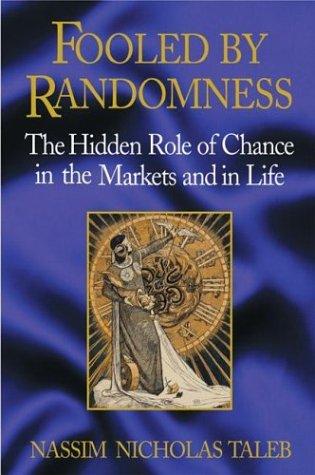
Fooled by randomness
Nassim Nicholas Taleb
Explores luck versus skill in markets and life, sharpening founder judgment on uncertainty and overconfidence.
Founder activity
Nobody has shelved this yet
Be the first founder to add it.