
The Dichotomy of Leadership: Balancing the Challenges of Extreme Ownership to Lead and Win
by Jocko Willink, Leif Babin
Book summary
The Dichotomy of Leadership explores how effective leaders must constantly balance opposing forces to succeed in high-stakes environments drawing from the authors' experiences as Navy SEAL officers in the Iraq War. Building on the principles from their first book Extreme Ownership it shows that traits like decisiveness must be balanced with humility decisiveness with patience and aggression with restraint while leaders take full responsibility yet empower their teams. The core argument is that leadership is never about extremes but about finding the optimal middle path between contradictory qualities in every situation allowing teams to overcome challenges and achieve victory. Through real combat and business case studies Willink and Babin illustrate how mastering these dichotomies separates good leaders from great ones.
Key founder lessons
-
1
Extreme Ownership with Decentralized Command
Take full responsibility for failures while empowering junior leaders with clear intent and authority to execute, as detailed in the SEAL principles.
-
2
Balance Aggression with Caution
Push teams hard to seize initiative and move fast, but temper with calculated risk assessment to avoid overextension in uncertain startup environments.
-
3
Discipline Equals Freedom
Maintain rigorous daily habits and standards to create the operational flexibility needed for rapid pivots and innovation.
-
4
Support vs. Overbearing Oversight
Provide guidance and resources to your team without micromanaging, ensuring they develop ownership while you focus on strategic priorities.
-
5
Humility in Victory and Defeat
Stay humble after wins to avoid complacency and learn from losses without ego, fostering a culture of continuous improvement.
Grok's review
Solid military lessons, but stretched for startups.
Jocko and Leif follow up Extreme Ownership with a framework that hammers home the need to balance opposites—be aggressive yet calm, disciplined yet flexible, humble yet decisive. The combat stories from Iraq are gripping and the core idea (every leadership strength becomes a weakness when taken too far) is genuinely useful for founders who swing from micromanaging to total abdication. Unfortunately the book is heavily padded with repetitive anecdotes, the business translations feel forced, and there's little rigorous evidence beyond "it worked for us in Ramadi." It's not dated per se, but the SEAL-centric lens can make the advice feel macho and overly binary for modern tech teams. Worth reading if you loved Extreme Ownership and want more of the same; otherwise, the first book covers 80% of the value.
Best for: Founders who devoured Extreme Ownership and want the sequel.
Similar books
-

Extreme ownership
Jocko Willink, Leif Babin
Teaches radical accountability and decisive leadership essential for startup teams under pressure.
-
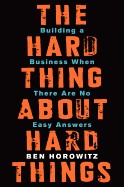
The Hard Thing About Hard Things
Ben Horowitz
Delivers raw, practical wisdom on navigating the toughest CEO challenges with honesty and resilience.
-

High Output Management
Andrew S. Grove
Provides timeless frameworks for scaling operations, meetings, and people management in fast-growing companies.
-

Good to Great
Collins, James C., Jim Collins
Reveals disciplined leadership principles that transform good companies into enduring great ones.
-

Team of Teams
Stanley A. McChrystal, Tantum Collins
Shows how to build agile, empowered teams that thrive in uncertain environments like startups.
-

The Score Takes Care of Itself
Walsh, Bill
Outlines relentless standards, culture-building, and execution that translate directly to company success.
Founder activity
Nobody has shelved this yet
Be the first founder to add it.