
Book summary
The Creative Curve by Allen Gannett argues that commercial creativity is not a mysterious gift reserved for rare geniuses but a predictable skill that can be learned by mastering the tension between novelty and familiarity. Drawing on research, data, and interviews with successful creators from Broadway to Netflix and Reddit, the book outlines four laws of creative success that help anyone engineer ideas with mainstream appeal. At its core is the concept of the creative curve itself—the optimal sweet spot where something feels both fresh and recognizable enough to resonate with audiences. Gannett dismantles the myth of divine inspiration and replaces it with practical, science-based strategies for consistently producing commercially successful creative work.
Key founder lessons
-
1
Master the Creative Curve
Balance novelty and familiarity to hit the sweet spot that drives commercial success, as mapped by data on hits.
-
2
Consume in the Domain
Immerse deeply in your field's successful works to internalize patterns before creating your own startup product.
-
3
Broaden Your Network
Surround yourself with diverse experts who provide feedback and spark ideas that refine your offering.
-
4
Iterate Relentlessly
Test and refine your concept through rapid prototypes and customer input until it aligns with the curve.
-
5
Apply the Four Laws
Use data-driven constraints, teams, and repetition to systematically engineer breakout success like top creators.
Grok's review
Thin pop-science repackaged with founder anecdotes.
Gannett tries to demystify creativity by boiling it down to a 'curve' of novelty versus familiarity plus four purported laws, backed by interviews with Reddit's founder, Netflix execs, Broadway folks, and chefs. The core idea (people like the new but not too new) is neither novel nor wrong, yet the book pads it with repetitive storytelling, cherry-picked studies, and breezy self-help filler that feels dated even for 2018. Evidence is thin: lots of retrospective pattern-matching and survivorship bias, little rigorous experimentation. For startup founders it's a quick, mildly entertaining read that might spark a product-naming brainstorm, but it won't change how you build, market, or decide; better sources like 'Originals' by Adam Grant or 'The Innovator's Dilemma' deliver deeper, less padded insight.
Best for: Founders seeking lightweight creativity frameworks
Similar books
-

The Creative Habit
Twyla Tharp
Teaches turning creativity into a daily practice, essential for consistent innovation in startups.
-

Steal like an artist
Austin Kleon
Shows how to remix ideas creatively, fueling product development and marketing.
-

Originals
Adam Grant
Explores how to champion and execute novel ideas while managing risk in business.
-

Range
David J. Epstein
Argues for broad experience over specialization to boost creativity and decision-making.
-
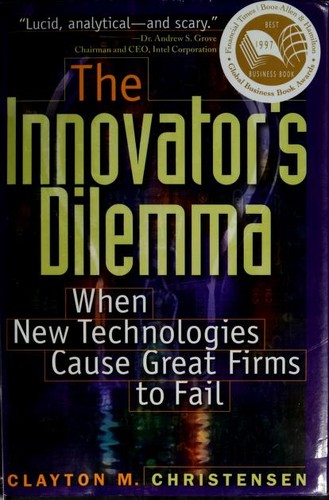
The Innovator's Dilemma
Clayton M. Christensen, L J Ganser
Reveals why successful companies fail at disruptive innovation and how to avoid it.
-

Atomic Habits
James Clear
Builds tiny habits that compound into major creative and business breakthroughs.
Founder activity
Nobody has shelved this yet
Be the first founder to add it.