Book summary
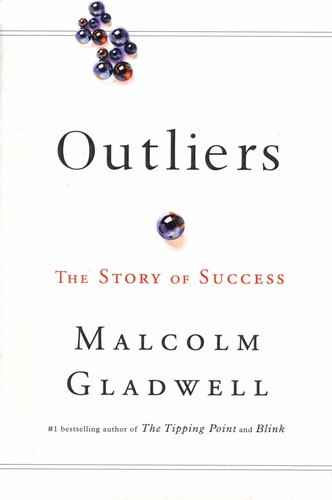
Outliers by Malcolm Gladwell explores what truly distinguishes exceptionally successful people from the rest arguing that we overemphasize individual talent and personality while ignoring the critical role of external factors such as culture family generation and unique opportunities. Through compelling stories ranging from software billionaires and the Beatles to elite athletes and math prodigies Gladwell demonstrates how hidden advantages like the timing of one's birth access to specialized training and cultural legacies create the conditions for extraordinary achievement. The book challenges the myth of the self-made person by showing that success is rarely the result of innate genius alone but emerges from a complex interplay of circumstance and accumulated advantage often described as the 10 000-hour rule of deliberate practice. Ultimately Outliers reframes high achievement as a product of environment and opportunity making a case for society to recognize and nurture potential more equitably.
Key founder lessons
-
1
Mastery needs 10,000 hours of deliberate practice
Founders must log enough focused hours on their craft before expecting outlier success, just as the Beatles did in Hamburg.
-
2
Birth timing creates hidden advantages
Launch during favorable generational or technological waves, like Bill Gates benefiting from early access to computers in the 1970s.
-
3
Cultural legacies shape behavior and outcomes
Examine how your upbringing and heritage influence work ethic or risk-taking, as Gladwell shows with Asian math proficiency rooted in rice farming.
-
4
Practical intelligence trumps raw IQ
Develop the social savvy to navigate opportunities and authority, the way successful lawyers in the book leveraged family and networks.
-
5
Opportunity is often arbitrary luck
Recognize and seize the specific, non-merit-based chances that appear, rather than assuming pure talent alone drives startup success.
Grok's review
Entertaining pop science that overpromises on 'secrets'.
Outliers is a breezy, story-driven read that popularized the 10,000-hour rule and the importance of hidden advantages like birth timing, culture, and opportunity. Gladwell weaves compelling anecdotes about Bill Gates, the Beatles, and hockey players that make founders feel like they're gaining insider wisdom on success. The core idea—that success is less about raw talent and more about luck, timing, and environment—is genuinely useful for avoiding the myth of the lone genius founder. However, it's padded with filler, relies on cherry-picked examples with thin causal evidence, and some claims (like the Asian math advantage or 10k hours as a magic threshold) feel dated or oversimplified today. It's more narrative journalism than rigorous social science, so treat it as thought-provoking inspiration rather than a playbook.
Best for: Founders seeking big-picture perspective on success factors.
Similar books
-

The Tipping Point
Malcolm Gladwell
Explores how small changes create big impacts, offering key lessons on virality and scaling startups.
-

Thinking, fast and slow
Daniel Kahneman
Reveals cognitive biases that shape decisions, essential for better founder judgment and strategy.
-

Atomic Habits
James Clear
Teaches systems for building productive habits that compound into extraordinary founder performance.
-

Range
David J. Epstein
Shows why generalists excel in complex fields, valuable for innovative problem-solving in startups.
-
Grit
Angela Duckworth
Demonstrates how passion and perseverance drive long-term success in building companies and careers.
-

The Psychology of Money
Morgan Housel
Uncovers behavioral truths about wealth that inform smarter startup funding and financial decisions.
Founder activity
Nobody has shelved this yet
Be the first founder to add it.