
Book summary
The Psychology of Invention in the Mathematical Field by Jacques Hadamard is a pioneering exploration of the mental processes behind mathematical discovery drawing on self-reports from great mathematicians like Poincaré and his own experiences. Hadamard describes a four-stage creative process—preparation, incubation, illumination, and verification—emphasizing the crucial role of the unconscious mind in generating sudden insights after conscious effort subsides. He argues that mathematical thought is primarily visual and intuitive rather than verbal or logical, relying on vague but fertile images that precede formal symbolic expression. The core argument is that invention in mathematics is not a purely logical exercise but a deeply psychological phenomenon governed by aesthetic sensibility and unconscious selection mechanisms that favor ideas of beauty and harmony.
Key founder lessons
-
1
Incubation precedes illumination
Founders must step away from intense problem-solving to allow subconscious processing, as Hadamard shows breakthroughs often follow deliberate disengagement.
-
2
Unconscious work drives discovery
Trust and nurture the mind's hidden machinery by feeding it rich problems then resting, mirroring how mathematicians like Poincaré experienced sudden insights.
-
3
Preparation primes the unconscious
Deeply immerse in a problem's details and analogies first, as Hadamard details, to stock the subconscious with material for later creative synthesis.
-
4
Aesthetic sense selects ideas
Cultivate beauty and elegance as a filter for viable solutions, just as mathematicians reject ugly proofs in favor of harmonious ones.
-
5
Intuition over logic alone
Hone pattern recognition and mental imagery to guide decisions, since Hadamard reveals most inventors rely on intuitive leaps rather than pure deduction.
Grok's review
Brilliant but bloated and mostly irrelevant for founders.
Hadamard’s 1945 exploration of how mathematicians get ideas is fascinating in its core insight—that invention happens in four stages (preparation, incubation, illumination, verification) with heavy unconscious processing—but the book is padded with long, meandering anecdotes, self-indulgent quotes from dead mathematicians, and dated psychological theories that feel quaint today. The evidence is thin and anecdotal; it’s more memoir than rigorous study. For startup founders it’s a mixed bag: the incubation idea is gold for anyone doing deep creative work, yet the Victorian-era framing and lack of practical takeaways make it a slog that most will abandon halfway.
Best for: Founders obsessed with creative process and willing to mine historical texts.
Similar books
-

The Creative Habit
Twyla Tharp
Reveals routines and rituals that fuel consistent creative output, essential for founders building innovative companies.
-
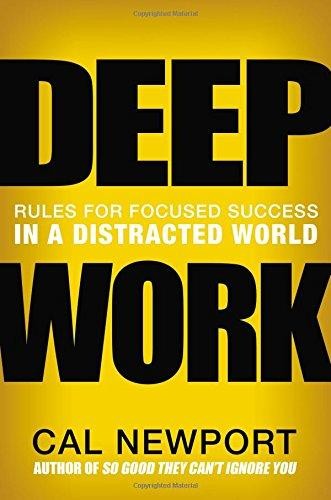
Deep Work
Cal Newport
Teaches how to cultivate focus and eliminate distractions to produce high-value creative work at scale.
-

The innovator's DNA
Jeff Dyer
Breaks down the five discovery skills that drive breakthrough innovation in successful entrepreneurs.
-

A Mind for Numbers
Barbara Oakley
Unlocks practical techniques for mastering difficult concepts and overcoming mental blocks in problem-solving.
-

Thinking, fast and slow
Daniel Kahneman
Exposes cognitive biases and decision-making patterns that every founder must navigate daily.
-

Originals
Adam Grant
Explores how non-conformists champion novel ideas and drive meaningful change inside organizations.
Founder activity
Nobody has shelved this yet
Be the first founder to add it.