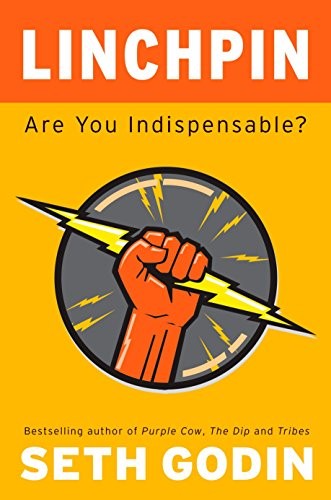
Book summary
Linchpin by Seth Godin argues that in today's economy the most valuable workers are those who become indispensable linchpins by choosing to solve interesting problems create art and connect people in ways that machines and rule-followers cannot. Godin contrasts the old industrial model of compliant cogs with the new need for passionate individuals who ship creative work overcome the resistance of the lizard brain and build emotional connections that add irreplaceable value. The core message is that anyone can decide to become a linchpin by embracing generosity mastery and humanity instead of waiting for permission or a map ultimately turning their work into a form of art that organizations cannot live without.
Key founder lessons
-
1
Become Indispensable
A founder must create unique value that can't be replaced by machines or cheaper labor to lead their startup to success.
-
2
Ship Creative Work
Founders should overcome the resistance and consistently deliver innovative products or ideas that matter to their market.
-
3
Build a Tribe
Leaders attract and nurture a group of passionate followers who spread the startup's mission and products organically.
-
4
Give Gifts Generously
Founders create loyalty by offering value first without expectation of immediate return, turning customers into advocates.
-
5
Make Art on Purpose
Treat your startup's offerings as intentional art that connects emotionally, differentiating from commoditized competitors.
Grok's review
Inspiring pep talk, padded with repetition.
Linchpin is Seth Godin at his most motivational, urging readers to become indispensable by shipping creative work, becoming artists, and rejecting the factory mindset of the industrial age. The core idea resonates deeply with founders who want to build something that matters instead of climbing a corporate ladder, and the call to 'be the linchpin' still lands as a useful mindset shift for anyone bootstrapping or leading small teams. That said, the book is weakened by significant padding, repetitive anecdotes, and a thin evidence base that relies more on Godin's rhetorical flair than rigorous data or deep case studies. Some of the examples already feel dated in 2024, especially around technology and the emerging 'connection economy' that has evolved far beyond what he described. It's worth a founder's time if you can skim it in a few hours, but don't treat it as a strategic playbook.
Best for: Early-stage founders seeking motivation to ship creative work
Similar books
-
The Dip
Seth Godin
Teaches when to quit and when to push through, essential for startup perseverance and strategy.
-

Tribes
Seth Godin
Explores leadership and building loyal communities, vital for marketing and team culture.
-

Atomic Habits
James Clear
Shows how tiny changes yield remarkable results, boosting founder productivity and execution.
-
The War of Art
Steven Pressfield
Confronts resistance to creative work, helping founders overcome procrastination and ship.
-

Drive
Daniel H. Pink
Reveals what truly motivates people, improving leadership, hiring, and company culture.
-

Purple Cow
Seth Godin
Challenges you to be remarkable in business, key for standout marketing and innovation.
Founder activity
Nobody has shelved this yet
Be the first founder to add it.