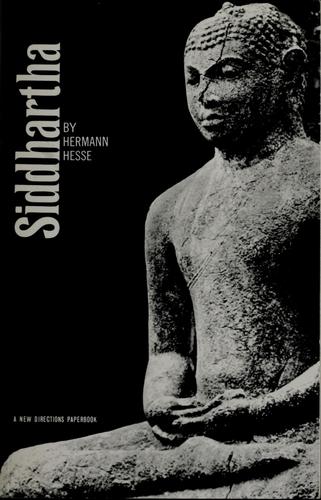
Book summary
Siddhartha is a young Brahmin who leaves his comfortable home and joins ascetics in the forest in search of spiritual truth and enlightenment during the time of the Buddha. He later encounters the world of wealth love and business through a courtesan named Kamala and a merchant but grows disillusioned by the emptiness of material life and the suffering it brings. After years of wandering and inner turmoil he finally achieves wisdom and peace by listening to the river which teaches him the unity of all things and the interconnectedness of every moment. The book's core argument is that true enlightenment cannot be taught by doctrines or gurus but must be discovered individually through personal experience and intuitive understanding of life's cyclical nature.
Key founder lessons
-
1
Embrace radical self-reliance
Siddhartha rejects teachers and doctrines, teaching founders to trust their own path over external validation or popular strategies.
-
2
Learn through direct experience
Rejecting secondhand knowledge, Siddhartha immerses in business, love, and loss, showing founders must test ideas in the real world to gain wisdom.
-
3
Master the art of listening
Siddhartha's river epiphany highlights deep listening to customers, markets, and intuition as the source of breakthrough insights.
-
4
Value the present over ambition
His years of wealth and despair reveal that chasing future success blinds founders to the lessons and opportunities in the current moment.
-
5
Find unity in opposites
Siddhartha discovers enlightenment by integrating asceticism with materialism, urging founders to synthesize conflicting business approaches.
Grok's review
Beautiful prose, but startup-irrelevant mysticism.
Siddhartha is a gorgeously written fable about a restless seeker who rejects teachers, wealth, and dogma in pursuit of authentic wisdom. The lyrical style and river-as-metaphor bits still hit hard on a second read, and Hesse nails the arrogance of the young founder-type who thinks he can shortcut enlightenment. That said, it's padded with repetitive introspection, the Eastern spirituality feels both dated and thinly evidenced for anyone who's read modern psychology or behavioral economics, and the plot is so allegorical it evaporates into vagueness. For startup founders it's mostly a distraction—pretty, but it won't help you ship faster, hire better, or make decisions under uncertainty.
Best for: Burned-out founders craving philosophical escape
Similar books
-

The Alchemist
Paulo Coelho (Author)
Fable of pursuing one's destiny with persistence and intuition, mirroring lessons in purposeful entrepreneurship.
-
Man's Search for Meaning : An Introduction to Logotherapy
Viktor Emil Frankl
Profound insights on finding purpose amid adversity, essential for resilient leadership and startup endurance.
-

The monk and the riddle
Randy Komisar, Kent L. Lineback
Explores passion versus the deferred-life plan, guiding founders toward meaningful careers and ventures.
-

Zen and the Art of Motorcycle Maintenance
Robert M. Pirsig
Meditative journey on quality and values that informs thoughtful decision-making in building companies.
-

The Bhagavad Gita
Eknath Easwaran
Timeless wisdom on duty, detachment, and focus applicable to ethical leadership and strategic choices.
Founder activity
Nobody has shelved this yet
Be the first founder to add it.